22nd May 2025
The end of April was unseasonably dry and remarkably warm. I took full advantage of the weather and busied myself with the usual springtime tasks in the garden and at the allotment. This year, I’ve given up the furthest of my plots, which has made a noticeable difference — instead of the typical April scramble to stay ahead of the weeds and fit in seed sowing between showers, I’ve been able to adopt a more relaxed pace. I’ve even been managing early morning bike rides before getting stuck into the day’s gardening. In previous years, I’d have been digging, hoeing, watering, and planting by 6 am on any day the weather witches were feeling generous. Happy days!
On a more troubling note, my nephew Simon had planned a trip to the USA with his girlfriend in a few months to visit friends. Disturbingly, his application for an ESTA was rejected without explanation. In a country where the authorities seem increasingly willing to detain both citizens and tourists on questionable grounds, we can only speculate. Perhaps one of his friends is flagged on some government list, or maybe he ‘liked’ a social media post deemed sensitive or controversial. A sad reflection of the times.
Last June, after getting rid of our swimming pool, we switched to a water meter. This week, I contacted our supplier, Severn Trent, to query why, despite having been away for much of the time since October and using very little water, we were still being charged £50 a month and had accrued £278 in credit. After waiting over an hour to get through on the phone, it was agreed that the matter needed further investigation. I also enquired whether I could pay for my sewerage charges in a single bill to Severn Trent, rather than paying separately to Anglian Water. To my surprise, I discovered that since June, I had already been paying Severn Trent for sewerage. A subsequent call to Anglian Water to protest and request a refund for the payments made since June resulted in a promise that the situation would be resolved within ten days. Fingers crossed.
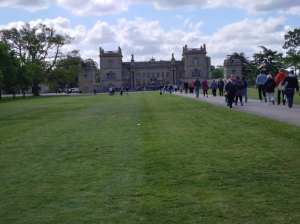 The 5th of May was a Bank Holiday, and we chose to spend the day visiting Grimsthorpe Castle. The estate was presented by Henry VIII as a wedding gift to William, 11th Lord Willoughby de Eresby, and his Spanish bride, Maria de Salinas, lady-in-waiting and close confidante of Queen Katherine of Aragon. Originally a small castle perched on a ridge, Grimsthorpe has been the seat of the de Eresby family since 1516. The current occupant is Jane Heathcote-Drummond-Willoughby, 28th Baroness Willoughby de Eresby, and granddaughter of Nancy Astor, who died at Grimsthorpe in 1964.
Sue had picked up a leaflet during our lunch with Jamie in Waltham on the Wolds and successfully applied for two free tickets. We decided to combine the outing with a visit to our friends John and Catherine Lee, who live nearby in Bourne. Though it was bright and sunny when we left Willow Bank at 9 a.m., a brisk north wind meant coats were pulled tight. We had Nala with us, as Jamie and Ruth had dropped off the little dog the previous Friday while they flew to Frankfurt for a few days. This meant that Sue joined the eager crowd wishing to tour the interior of the stately home, while I explored the extensive grounds and gardens with our four-legged companion. We reunited at midday in the walled garden, using a location-sharing app to find each other and enjoy a picnic lunch.
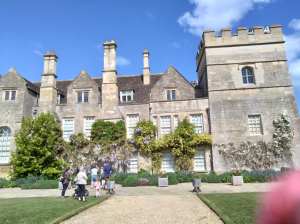
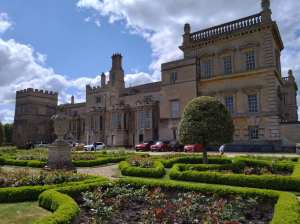
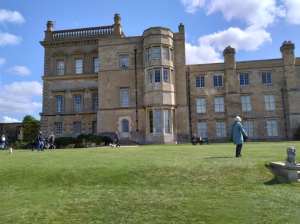 On our way to visit John and Catherine, we broke the journey with a stop in Bourne town centre. We first visited Bourne Abbey Church (dating from 1066), followed by a walk through the nearby Wellhead Park and the site of Bourne Castle. Established shortly after 1071 by Oger the Breton, all that now remains of the castle are traces of the enclosed mound and the inner and outer moats.
We spent a couple of hours with our hosts, who served a delicious late lunch of homemade quiche and salad. I had visited John a few weeks earlier following his knee surgery, when he was clearly in considerable pain and looked far from well. Thankfully, this time he was back to his old self, much more mobile and largely pain-free.
On one of my morning bike rides, I came across a large pile of freshly cut logs that had been illegally dumped at the entrance to a farmer’s field. Returning a few hours later, I helped the unfortunate farmer by removing two carloads and spent the next two days cutting them up for firewood.
The Monday after VE Day, Sue and I treated ourselves to a night away at Hellidon Lakes Hotel, near the picturesque village of Hellidon. We left Harborough under blue skies for a 50-minute drive and a picnic before checking into our accommodation. We arrived at 10:30 am and had planned a walk to fill the time until check-in at 3 pm. The hotel, which also serves as a golf and spa venue, had a fairly busy car park when we arrived. We parked in the welcome shade of a bank of trees and pulled on our walking boots.
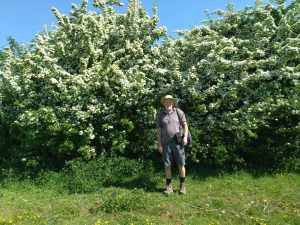 With my GPS displaying the route, we set off through the hotel grounds on what would be a gentle three-mile amble. The hotel is nestled within the golf course, and the views in every direction were stunning. We had passed through many beautiful, chocolate-box villages on the journey, and from our elevated position atop Hellidon Hill, we could see several of them dotted across the landscape.
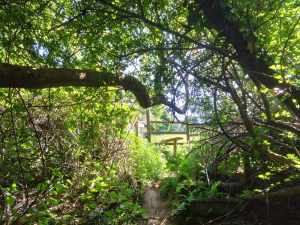 We hadn’t gone far before encountering a friendly couple with a Tibetan Terrier in tow. We stopped for a few minutes to chat and to enquire how the dog could possibly see through the thick mop of hair covering its face. I remarked that she looked more like a miniature yak than a dog.
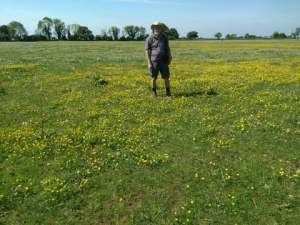 Our trail led us to the splendid village of Priors Marston. “Priors” reflects the fact that the village once belonged to St Mary’s Priory in Coventry. “Marston” combines the Old English words merse, referring to a lake or fishery, and tun, meaning a settlement. We wound our way through the village, passing the primary school and the Church of Saint Leonard. The earliest known church on the site dates to the 13th century; the tower, from the 17th and 18th centuries, survives, though the rest of the building was largely rebuilt in 1863 and stands in that form today.
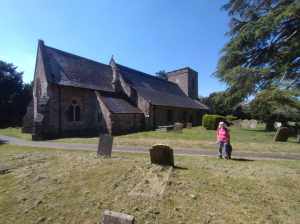 We paused briefly to explore the cemetery, but it was the cottages and grand houses that truly captured our attention. We found ourselves stopping often to admire their architecture. Leaving Priors Marston behind, we again plunged into the Warwickshire countryside, soaking in the sweeping views, the warm sunshine, and the peace and quiet. Apart from the birds and sheep, and the occasional soft hum of bees about their business, we had the world to ourselves.
We chose the shade of an ash tree for our picnic, amused by the curious sight of last autumn’s keys still clinging in limp, brown bunches among the fresh green foliage.
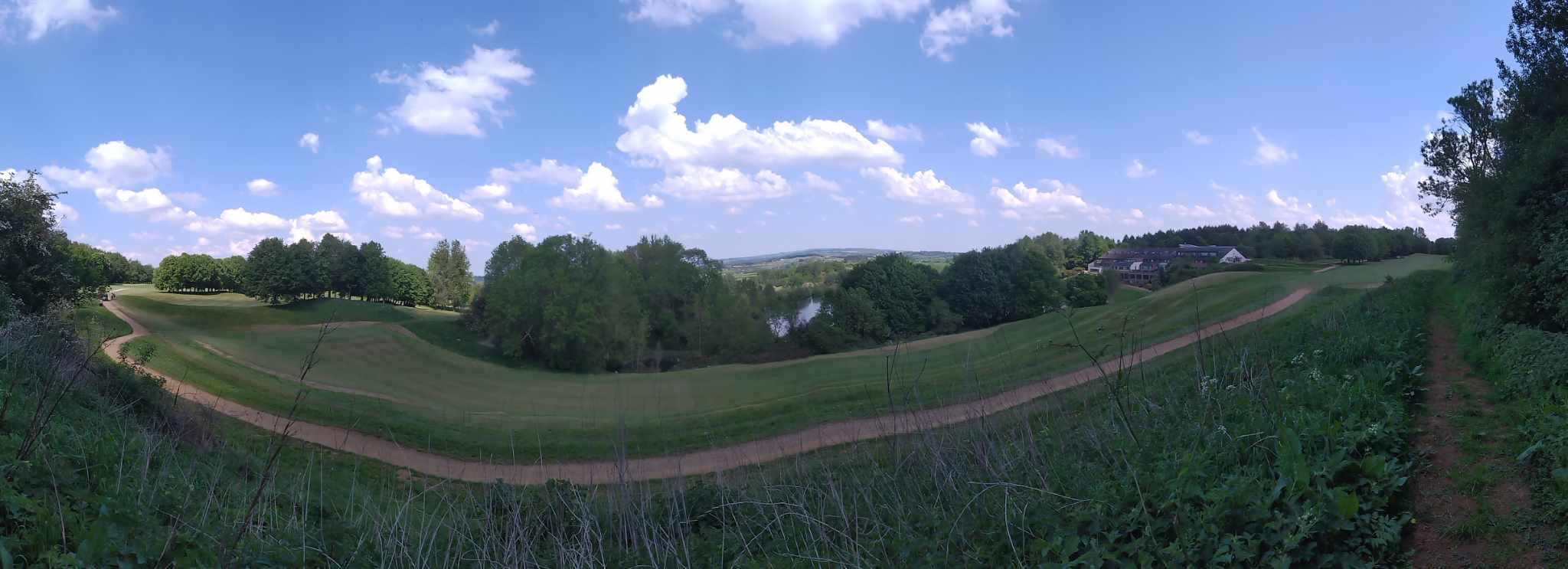 Feeling fully satisfied, we completed the final leg of our walk and returned to the hotel. With an hour to spare before check-in, we settled ourselves on the elevated balcony with drinks from the bar, watching the golfers below as they went about their game on the greens.
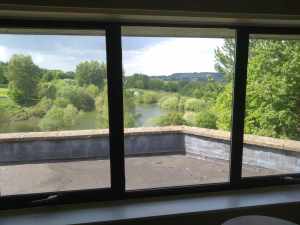
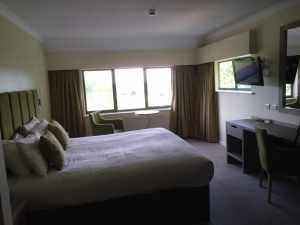 Our allocated room, described by the receptionist as her favourite, was gorgeous, spacious and well-proportioned, with lovely views over the lake and golf course. Sue had a 5 pm appointment at the spa, leaving me to relax in front of the television until she returned. At 7 pm, we made our way to the hotel restaurant. As expected, the meal was beautifully presented and tasted fabulous.
The late evening view from the dining room was a fitting end to the day, the sun setting slowly, casting a golden hue across the sky that deepened as we lingered over our meal. A perfect way to spend a peaceful post-bank holiday break.
After a very peaceful night, we awoke to enjoy the view across the golf course, where a pair of swans glided majestically across the lake. We joined the other guests for a sumptuous breakfast in the dining room and, rather rashly, decided to attempt the hotel trail. According to the leaflet, with its map and description, it would take about an hour and was said to be easy to follow.
We had already walked part of the route during yesterday’s ramble and expected a well-trodden path, not one that required boots or long trousers, so, mistakenly, I opted for shorts and sandals. We decided to tackle the route in reverse. At first, all went well, but upon reaching the end of a wooded section where a gate opened into a grassy field, a boggy stream cut across the path, making further progress impossible without proper footwear.
Doubling back into the woods, we forged our own route along a slope which led us onto the golf course, where we were able to rejoin the trail. The going remained easy until we reached the far side of the course, where the path led through another wooded area—this time, along a narrow, overgrown trail thick with brambles and nettles. In shorts, it was set to be a painful affair. After about 50 metres, we again turned back and instead plotted a route across the manicured fairways of the course.
One small consolation from our venture into the ‘rough’ was the discovery of several lost golf balls, which were swiftly popped into Sue’s rucksack. We returned to the hotel in good time to check out by 11 am.
 The receptionist recommended we visit St John’s Church in the village of Hellidon, so that’s where we headed next. There has been a church in Hellidon since the twelfth century; the present building dates largely from the sixteenth century, with significant nineteenth-century restoration. The tower, however, is fourteenth-century.
As we parked some distance away, the sound of church bells could be heard ringing out, continuing as we climbed the small hill upon which the church stands. Inside, the bellringers were just finishing a practice session. Among them was the lady owner of yesterday’s Tibetan Terrier, who came over to chat and ask if we’d enjoyed our ramble.
We spent a short while exploring the interior of the church, though we weren’t particularly impressed, and soon made our way back to the car.
 Our next destination, after a 15-minute drive, was the charming village of Napton. We intended to visit the award-winning Napton Cidery, but as it didn’t open until noon, we had half an hour to fill. We diverted to The Folly pub, located beside Napton Bottom Lock on the Oxford Canal. It was a beautifully sunny day, perfect for spending time watching canal boats chug their way through the lock.
We were the first customers of the day at the cidery. After sampling several of their brews, we chose to buy a case of their No. 6, then sat outside on a bench enjoying a glass each of the delicious apple elixir.
Suitably refreshed, we enjoyed an uneventful journey back to Willow Bank, where we spent the afternoon watering the garden plants.
At 9 am on Saturday morning (13th), I cycled to the surgery for an ultrasound scan, arranged following a blood test a few weeks ago. Afterwards, I collected a new pair of prescription sunglasses from Specsavers, then spent the rest of the morning tidying up the allotment. Meanwhile, Sue spent her morning grocery shopping before visiting Doreen to collect a large batch of card-making paraphernalia that Doreen no longer wanted and thought Sue might be able to pass on to the family or sell. Later in the afternoon, I watched the Tigers lose to Bath with Sean and Jim in the garden room.
On the 20th, Sue and I headed north for two glorious, sunny days in Nottingham. After a 50-minute drive, we parked at Nottingham Station car park, where we left the car overnight. Our hotel, the Leonardo Hotel, was conveniently located on Station Street in the city centre but did not have its own dedicated parking. At just £9.50 for 24 hours and only a five-minute walk away, the station car park was an ideal choice.

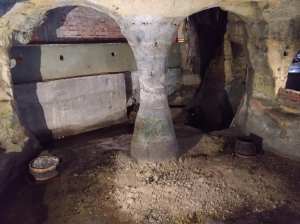 We had booked an 11 a.m. slot to explore the City of Caves, a network of over 800 caves carved out of sandstone and used over the years as a tannery, pub cellars, and even an air raid shelter. After a short walk to the bottom of the Garner’s Hill Steps, we were pleased to be allowed in half an hour early, as I had downloaded the audio commentary onto my phone. The trail took us around an hour to complete. We stopped regularly at each marked station to listen to the recorded history of the site, taking our time to absorb the information and imagine the lives once lived in those subterranean spaces. It was a thoroughly unique experience, something we’d been meaning to do for years, but never quite managed until now.
After leaving the caves, we walked up Garner’s Hill into the Lace Market district. This historic quarter-mile square was once the centre of the global lace industry, filled with salesrooms and warehouses used to store, display and sell lace. Today, it’s an eclectic blend of quirky businesses, vintage clothing shops rubbing shoulders with second-hand bookshops, bijoux boutiques, stylish salons, and tattoo studios. We didn’t linger long, as we were eager to visit Nottingham Castle.
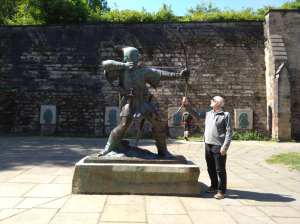 Consulting Google Maps, we made our way across the city to the castle’s lofty position overlooking Nottingham. Originally built in 1068 on the site of a Norman stronghold, the castle was expanded through the medieval period and became both a key royal fortress and occasional royal residence. After paying the entrance fee, we began with the Robin Hood exhibition, dedicated to Nottingham’s most beloved outlaw. Over the centuries, Robin Hood’s legend has evolved into one of popular culture’s best-loved folk tales, retold in everything from medieval ballads to Hollywood blockbusters. The exhibition included interactive displays and a high-tech video presentation, pure hokum, but great fun nonetheless. Sue especially enjoyed trying her hand at archery.
We then climbed up onto the Motte, where we took photos from the castle walls, enjoying panoramic views over the city. Inside the museum, we explored the Art, Lace, and Collection galleries. As expected, there were many video displays explaining and showcasing Nottingham’s rich and varied history. After a brief stop at the castle shop, we made our way to Ye Olde Trip to Jerusalem for lunch and refreshments.
 This historic pub is one of several that lay claim to being the oldest in England. Built into the rock beneath Nottingham Castle, it originally served as the castle’s brewhouse and is believed to date back to the medieval period. Some sources claim the pub’s history stretches as far back as 1189, coinciding with King Richard the Lionheart’s departure for the Crusades, though many historians place its origins in the early 17th century. The name is thought to refer to a stop on a pilgrimage rather than the journey itself, suggesting the pub was a resting place for travellers en route to Jerusalem.
Perhaps the most distinctive feature of the pub is its rear rooms, small caves carved into the sandstone rock beneath the castle. In an upstairs room, there’s a small wooden model ship known as the “cursed galleon.” Legend has it that several people who attempted to clean it met mysterious and untimely deaths. As a result, landlords have since locked it in a glass case, never to be touched. Elsewhere, the pub also houses the so-called “pregnancy chair”, an old wooden seat said to increase a woman’s chances of conceiving. Sue did not sit in it!
For lunch, I opted for my usual hearty choice, a substantial beer and beef pie, washed down with a local ale called Olde Trip. Sue chose a more unusual dish: pulled mushroom chilli, which she declared to be delicious.
It was a twenty-minute walk back to the car to collect our bags, followed by a short five-minute stroll to check into the Leonardo Hotel. We were given a lovely room on the 11th (top) floor, which offered a wonderful view over the city towards the castle. Our booking included a complimentary special coffee in the hotel bar and a bottle of Prosecco. We decided to save the coffee for just before setting off to the Nottingham Playhouse, where we were due to see A Thousand Splendid Suns, a play based on Khaled Hosseini’s novel. Set in Afghanistan, it tells the harrowing story of two women whose lives tragically intertwine under Taliban rule.
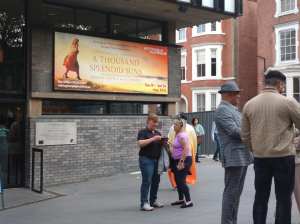
 The performance was sold out, although we noticed a few empty seats and wondered why. The plot unfolded towards a heartbreaking conclusion, offering a powerful insight into life under such an oppressive regime. At times, it was difficult to watch, and, for the many Muslim audience members present, I imagine it was particularly affecting. It was a thought-provoking and moving evening’s entertainment.
On our return to the Leonardo, we enjoyed our bottle of Prosecco in the bar before retiring for the night.
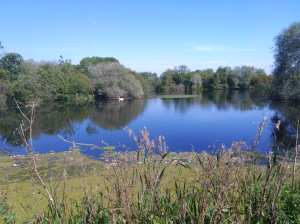 After a traditional full English breakfast the next morning, we checked out and set off on a twenty-minute drive to the Attenborough Nature Reserve. Located in the village of Attenborough, the site was established in 1966 and officially opened by Sir David Attenborough. Renowned for its birdlife, with over 250 species recorded, it also supports a rich variety of plants and insects. It’s considered one of the UK’s top locations to spot kingfishers and is also home to rarer species such as bitterns and otters.
We had visited the reserve a few years ago and thought it would be an ideal place to break our journey home, especially on such a lovely sunny day. After a visit to the Information Centre, we set off on a circular trail that winds through former gravel pits excavated between 1929 and 1967. The site features numerous ponds of varying sizes, with carefully managed habitats including vegetated islands and low-lying spits. The River Trent runs alongside, playing a vital role in attracting birdlife, as do the southern fields, which comprise rolling farmland, mature hedgerows, wooded hillsides, and a river flash. As we moved from hide to viewing point, we spotted an impressive variety of birds, including swan, heron, reed bunting, sandpiper, tern, tufted duck, and teal, to name but a few.
On our return home, Jamie and Ruth paid us a visit. Jamie had arranged to leave his Aston Martin in our garage while he flew to Turkey on holiday with three of his friends. Ruth’s parents were moving into their new house in Melton Mowbray at the weekend, having returned from France, and needed the garage where the Aston was usually kept to store their furniture.
The following day (21st), Sue and I drove to Newbold Verdon to see Sarah and Archie and to drop off their birthday presents. After a quick tour of their garden to see the new outdoor kitchen and greenhouse, Sarah drove us, with Mia, to nearby Sence Valley Forest Park. Once a vast opencast colliery, it has been transformed into a haven for wildlife and was opened to the public in September 1998 as part of The National Forest. Over 98,000 trees have been planted there.

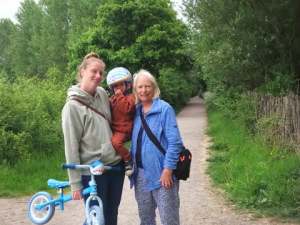
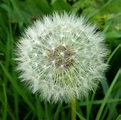 There was a marked change in the weather compared to the previous sunny days; thick cloud cover and a chilly breeze kept the temperature down to 13°C. Like our walk the day before in Nottinghamshire, the park featured abundant wildlife, woodland, and ponds. Sarah had brought Archie’s bike along to help him keep up, and when his little legs grew tired, his pushchair allowed us to continue without too many pauses. Sue and I introduced him to dandelion clocks, the old custom of counting the number of puffs needed to blow away the seeds to ‘tell the time’. He enjoyed the game, even if the meaning behind it may have escaped him.
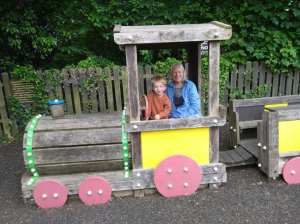 On the way back to Newbold Verdon, we stopped for a splendid lunch at the Gate Inn in Barlestone. After a brief coffee stop back at Sarah’s, we said our goodbyes, she and Archie were off to collect Alice from school, and we headed home.


Leave a Reply